
Public safety BDA and ERCES, explained
Building owners, contractors and property managers ask us the same questions: what a BDA is, whether their building needs one, and which codes apply. Here are the short answers.
Requirements vary by city and county, so the final word always belongs to the local Authority Having Jurisdiction (AHJ), usually the fire marshal. We are happy to help you find out what applies to your building.
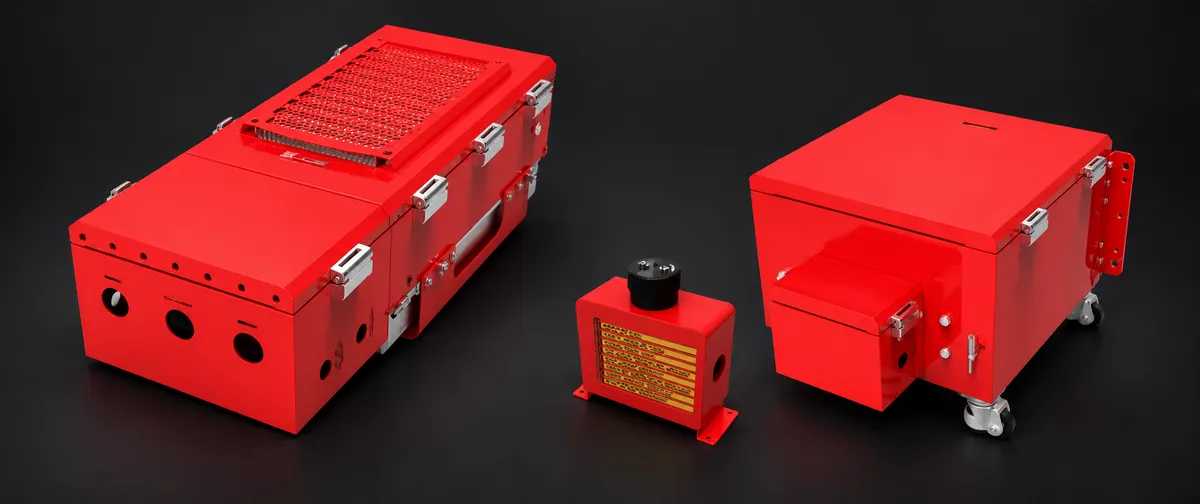
BDA, DAS and ERCES
BDA
Bi-Directional Amplifier. It boosts the radio signal both ways: into the building and from the radios back out to dispatch and to responders outside.
DAS
Distributed Antenna System. The network of indoor antennas, cabling and remote units that spreads the signal through the building. A DAS can also carry cellular service, so not every DAS is a public safety system.
ERCES
Emergency Responder Communication Enhancement System. The name for the complete system: BDA, DAS, donor antenna, backup power and monitoring.
Frequently asked questions
The basics
What is a BDA system?
A BDA (bi-directional amplifier) system improves two-way radio coverage inside buildings where concrete, metal and other materials weaken public safety radio signals. It helps firefighters, police officers and other emergency responders talk to each other, to personnel outside and to dispatch. It typically includes the amplifier, an outdoor donor antenna, indoor antennas, cabling, backup power and monitoring equipment.
What is ERCES?
ERCES stands for Emergency Responder Communication Enhancement System. It is the complete in-building system that improves public safety radio coverage. The BDA is one part of it.
What is the difference between a BDA and a DAS?
The BDA amplifies the signal; the DAS distributes it through the building. In a public safety system, both are parts of the ERCES.
Does my building need one?
How do I know if my building needs a BDA?
A building may need a BDA if emergency responders cannot keep reliable two-way radio communication inside. An RF grid test shows whether it passes. Size or type alone does not decide it: the local AHJ, usually the fire marshal, determines whether testing or a BDA is required.
Which Florida buildings are exempt?
The Florida Fire Prevention Code, adopted under Section 633.202 of the Florida Statutes and used by the City of Jacksonville, exempts these from minimum radio signal strength requirements and assessment: one- and two-family homes and townhouses; buildings under 12,000 total gross square feet with no underground areas; apartments and transient lodging under three stories with direct access from the unit to an exterior exit; and certain wood-frame apartment buildings. Confirm with your AHJ.
When is a coverage evaluation usually done?
During new construction, major renovations, additions, changes in building use or occupancy, or when responders report unreliable radio communication inside the building. Changes to the local public safety radio network can also affect indoor coverage.
If my building passes, do I need anything else?
The passing report goes to the AHJ. Some jurisdictions require retesting every few years, so ask us or your AHJ about the local schedule.
Cost, timing and service
How long does a BDA project take?
It depends on the building, the permit review and the construction schedule. Testing is fast; design, permitting and installation take longer, so start early, ideally in the planning stage.
Do BDA systems need annual testing?
Yes. Installed systems need regular inspection and testing as required by the fire code and the AHJ, usually every year, plus a check after renovations or radio network changes.
Do you service systems installed by others?
Yes. We test, maintain and repair BDA systems from other installers and other manufacturers.
Testing and project planning
Is the building over 12,000 sq ft?
If it is (or it has underground areas), plan a radio signal assessment unless the AHJ says otherwise.
RF grid test
We test every floor and send a pass/fail report.
Passes coverage
The passing report goes to the AHJ. Retest when the AHJ requires it.
Fails coverage
We review the grid with you, estimate the project cost and, once approved, design the system.
Permitting and installation
Permits, installation and coordination with the other trades.
AHJ acceptance and annual testing
Final acceptance test with the fire marshal, then yearly testing and maintenance.
Code references
The main codes and standards behind public safety radio coverage in Florida. Your AHJ decides which editions apply.
Fire codes
- Florida Fire Prevention Code (Section 633.202, Florida Statutes)
- NFPA 1, Fire Code: in-building emergency responder communication enhancement systems
- International Fire Code, Section 510
Standards
- NFPA 1225 (current standard for emergency services communications)
- NFPA 1221 (earlier editions, still referenced by some jurisdictions)
- NFPA 72 (fire alarm monitoring of the BDA)
Local requirements
- City of Jacksonville BDA testing and installation requirements
- Orange County BDA requirements
- City of Orlando BDA requirements
City of Jacksonville requirements
Download the City of Jacksonville survey and installation requirements for public safety BDA systems.
Other cities and counties
Orange County, Orlando and other jurisdictions have their own requirements. Call us at 904-384-1270 and we will help you find the ones that apply to your building.
Still have questions?
Talk with our BDA team about your building. Se habla español.